Estate Tax Exposure on Large Exchanged Property Portfolios
Repeated exchanges build hidden tax liabilities that collide with estate taxes at death.
The Long Carry Editors
Editorial team
The Long Carry editorial team covers estate and legacy planning, portfolio transition and depreciation.
16 stories
Repeated exchanges build hidden tax liabilities that collide with estate taxes at death.
Defer capital gains taxes while moving equity to higher-growth markets.
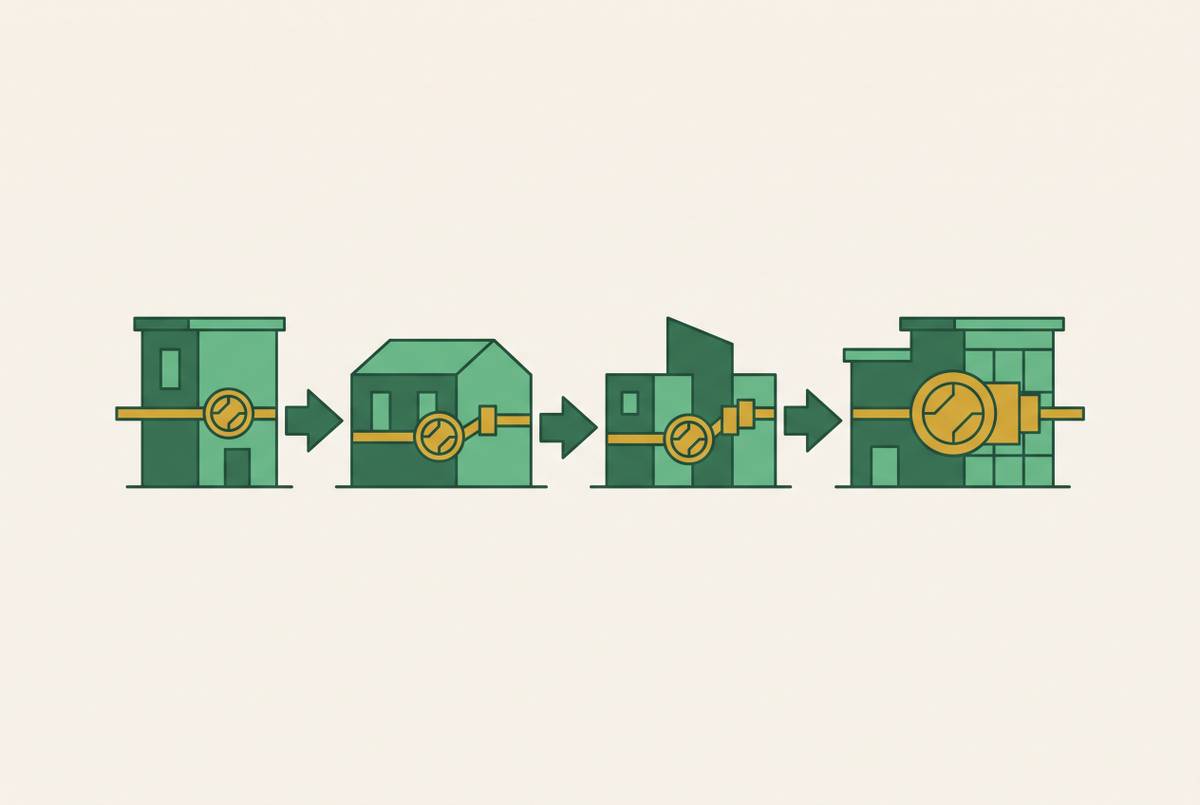
Basis carries forward through sequential exchanges, compounding tax deferral across decades.
Combining 1031 exchanges and cost segregation multiplies tax benefits across properties.
Timing a cost segregation study before exchanging property reshapes your recapture liability.
Misclassified dealers lose capital gains treatment, depreciation, and 1031 exchanges permanently.
Bonus depreciation applies only to excess basis, not carryover basis, after a 1031 exchange.
How a 1031 exchange defers—but doesn't erase—depreciation recapture across property chains.
Pay the tax now if your gain is small, your timeline is tight, or you need the cash.
Inflation silently shrinks the real cost of a deferred tax bill across multiple 1031 exchanges.
Qualified intermediaries hold sale proceeds in limbo, creating a hidden drag on portfolio returns.
Most qualified intermediaries pocket interest on your exchange funds instead of returning it to you.
Deferring taxes through a 1031 exchange compounds wealth across multiple cycles.
Four decades of compounding gain can vanish at death through one tax code loophole.
One slip in three decades of exchanges wipes out decades of tax-deferred compounding.
The unpaid tax bill becomes interest-free capital that compounds while the government waits.