When Paying Capital Gains Tax Now Beats Deferring
Pay the tax now if your gain is small, your timeline is tight, or you need the cash.
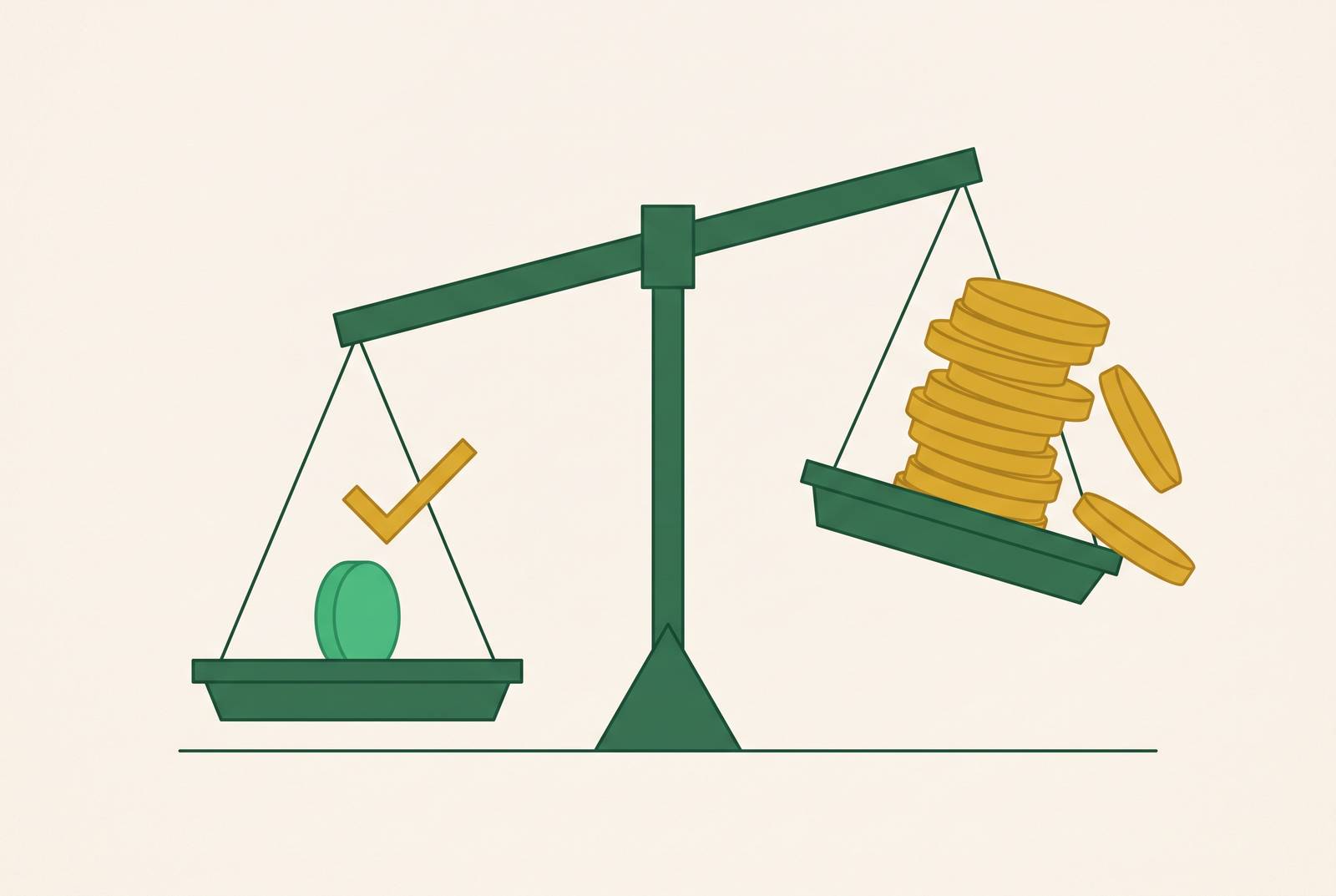
A 1031 exchange defers capital gains tax on real estate. It does not erase the tax, and deferral is not automatically the right move just because the code allows it. The decision comes down to a handful of concrete variables: the size of the gain, the investor's need for liquidity, the timeline, the direction of tax rates, and what the investor actually wants to do with the rest of their life. Most investors treat the exchange as a default rather than a choice with real tradeoffs, and that habit is the single biggest reason exchanges go wrong.
Section 1031 defers gain. It does not forgive it. The gain from the relinquished property carries forward into the replacement property's basis, now lower than it would otherwise be, and the bill comes due eventually, unless the investor dies holding the asset and gets a step-up, or keeps exchanging indefinitely. Deferred and avoided get treated as synonyms constantly. They are not the same word, and the space between them is where planning either holds up or falls apart.
The mechanics that make deferral possible are unforgiving, and the strictness is the point. The proceeds from the sale can never touch the investor's hands. A Qualified Intermediary holds every dollar from the moment the relinquished property closes until the replacement property closes, and if the investor takes constructive receipt of the money at any point, even for an afternoon, the exchange is void and the full gain becomes taxable immediately. Two deadlines govern the process, and neither bends: 45 calendar days to identify replacement property in writing, and 180 days to close. Financing delays don't extend it. Seller default doesn't extend it. Title problems don't extend it. The only exceptions are IRS-declared federal disaster areas and postponements tied to military or combat zone service under IRC §§7508 and 7508A. Outside of those two carve-outs, the calendar is the calendar, full stop.
The compounding math that makes deferral compelling, and its hidden assumptions
The case for exchanging runs through depreciation, and it holds up, as far as it goes. A larger replacement property throws off correspondingly larger annual depreciation deductions than a smaller property bought with after-tax dollars. That gap compounds every year the investor holds, and reinvested at a modest return over a couple of decades, it turns into a meaningful sum. On paper, it looks like a case for exchanging every time.
On paper is doing a lot of work in that sentence, though, because the math only holds if three things go right, and none of the three is guaranteed. It assumes the investor reinvests the deferred tax into productive real estate rather than a marginal deal signed under deadline pressure. It assumes the investor holds long enough for the compounding to appear in the investment's returns. And it assumes the investor either dies holding the property and gets the step-up, or keeps exchanging forever, because the moment someone sells without exchanging again, the deferred gain comes due, possibly at a higher rate than the one they deferred at originally.
Rates can rise between now and the eventual sale, turning a deferred liability into a larger paid one. The investor might need liquidity before the compounding gets its runway. The replacement property might simply underperform, in which case a higher cost basis in a strong asset would have beaten a lower basis parked in something stagnant. Deferral is a bet that time, reinvestment discipline, and rate stability all break the same direction at once. That is not a free bet. Selling it as one is how the depreciation math gets oversold to investors who never asked for the fine print.
When the Exchange Costs More Than It Saves
Exchanges are not free to run. A Qualified Intermediary charges a fee to hold funds and administer the exchange, and against a large gain, that fee is a rounding error. Against a small one, the ratio flips.
An investor with a modest gain may find the deferred tax barely clears the cost of the exchange plus the burden of hitting two hard deadlines under real time pressure. Investors in the 0% long-term capital gains bracket face the sharper version of the same problem: the federal tax actually owed can approach, or match, the cost of running the exchange, at which point the exchange buys nothing but added complexity. Carried losses elsewhere in the portfolio that offset the gain produce the same result by a different route. A small net taxable gain does not justify deadline risk and paperwork, and no amount of depreciation math rescues that math once the gain is this thin.
The break-even point moves wherever a no-fee model exists. Some Qualified Intermediaries charge no fee to open the exchange and return the interest earned on held funds back to the investor, dropping the cost side of the ledger close to zero. Deferred runs this way: no fee to open or run the exchange, interest on held funds shared back with the client. That structure removes cost as the deciding factor in more cases than investors assume, but it does not rescue a gain small enough that paying the tax was always the right call. Some gains are just too small to bother exchanging, and pretending otherwise wastes forty-five days.
Capital Needs, Liquidity, Diversification, and the Cost of Locking Equity
The exchange rules require reinvesting all of the equity and replacing all of the debt from the relinquished property into the replacement property, at equal or greater value. Any equity pulled out, or any drop in debt not offset by new cash, becomes taxable "boot." The exchange gives an investor exactly two choices: commit the full amount to more real estate, or accept a taxable event on whatever gets pulled out.
That structure creates a genuine conflict for investors who need cash for something other than more property. Someone selling a rental who wants to fund a business, pay down personal debt, or cover a major expense runs straight into a wall, because a 1031 exchange has no mechanism for partial deployment without taxing the retained portion. Investors heavily concentrated in real estate who want to diversify into stocks, bonds, or a private business hit the same wall from a different angle. The exchange, by design, locks the investor further into real estate. It was never built to get anyone out, and treating it as an exit tool misreads what the statute actually does.
Paying the tax and freeing the capital is the only path that serves the goal here. No depreciation projection changes that math when the money needs to leave real estate for good.
A Timeline That Cannot Be Met, and a Failed Exchange Worse Than Not Starting One
The 45-day identification window and the 180-day closing window are absolute, and market conditions can make honoring them genuinely hard. Tight inventory, competitive bidding on replacement properties, financing delays, and slow title work all eat into a window with zero flexibility outside of narrow IRS-recognized exceptions.
A lesser-known trap sits inside the calendar itself. Exchanges started between October 17 and December 31 run into a compressed effective window, because the 180-day close deadline can't exceed the investor's tax return due date, including extensions, whichever comes first. An investor who sells on December 12, 2025 would ordinarily expect a 180-day deadline of June 10, 2026. Without filing an extension, though, the real deadline is April 15, 2026, 53 days earlier. Investors selling late in the year need to know this before assuming the full 180 days are theirs.
Identification carries its own risk. Most investors rely on the three-property rule, identifying up to three potential replacements regardless of value. The 95% exception, which lets an investor identify unlimited properties as long as they close on 95% of the combined identified value, exists on paper but sees little real use, because closing on nearly everything identified is a hard standard to clear. An investor who cannot honestly say they will identify and close within these windows should not start the exchange. A failed exchange does not just cost the deferral. It can leave the investor scrambling for a taxable sale on worse terms than if they'd planned for a straight sale from the start.
Rising Tax Rates and the Larger Future Liability Deferral Locks In
Deferral pays off only if the future tax rate matches or beats today's rate. If rates rise in the interim, the investor has effectively borrowed against their own gain at a cost that keeps climbing, a point investors routinely skip past because deferral feels like a win regardless of which way rates move.
Legislative history offers no reassurance that the rate environment gets friendlier with time. Capital gains rates have shifted repeatedly across administrations, and an investor deferring a large gain today has no guarantee the rate environment a decade or two out lands equal or lower.
This matters most for investors sitting in an unusually low-income year, whether from business losses, large deductions, or a temporary dip in earnings. That investor, paying tax now while in a lower bracket than usual, can lock in a rate genuinely better than what they'd face later. Deferring in that scenario is a bet that the tax code gets kinder down the road, and the historical record does not back that bet with much confidence.
When a Clean Exit Is the Better Outcome
The 1031 exchange assumes an investor who wants to keep owning real estate. That assumption does not hold for everyone, and forcing it to hold anyway usually produces a worse outcome than simply paying the tax and moving on.
Retirement is the clearest case. An investor who no longer wants tenant turnover, maintenance calls, and landlording responsibilities gains nothing by exchanging into another property that carries the same obligations forward. Relocation raises a similar question: an investor moving to a state with no or low capital gains tax may come out ahead selling and paying federal tax now, rather than deferring and later triggering the liability in a higher-tax state. Health and estate planning add another layer, where simplifying the asset base, rather than perpetuating a chain of exchanges heirs may have no interest in managing, is sometimes the more responsible call.
Related-party exchanges carry a specific trap. Exchanges involving family members or controlled entities require both parties to hold the properties for at least two years. If personal or business circumstances force a sale before that window closes, the full deferred tax comes due immediately, with no partial relief.
Investors who want to step back from active management without leaving real estate altogether have a middle path in Delaware Statutory Trusts: accredited investors can use a DST as qualifying replacement property and complete a 1031 exchange without the day-to-day burden of direct ownership. A DST is still a commitment to real estate, just a passive one. Investors who want out of the asset class entirely have no 1031-compatible option, because the entire framework assumes the investor is staying in the game. When that assumption does not match reality, the exchange is the wrong tool, and no structuring gets around that.
A Framework for Running the Decision Before Signing Anything
Four questions settle most of this before an investor ever calls a Qualified Intermediary.
How large is the gain, and what is the tax actually owed? The exchange only earns its complexity when the liability is material against the cost of running one. Does the investor need or want access to any of the proceeds? That raises the question of how much of the gain would be taxable rather than deferred, and partial deferral may or may not still make sense once it's answered. Can the investor realistically identify and close on qualifying replacement property within 45 and 180 days given current market conditions? If the honest answer is "maybe," price that uncertainty in before proceeding, not after. Finally, what's the plan for the deferred gain: another exchange down the line, a step-up at death, or an eventual taxable sale? Whether deferral is a real long-term strategy or just a bill pushed one term further down the road depends entirely on that answer.
Rate environment deserves its own explicit check. Investors in a temporarily low-income year should compare today's effective rate against a realistic expectation of future rates, rather than assuming deferral is automatically favorable. For some, paying now locks in a discount that will not come around again.
The exchange is not the only tool on the shelf, either. An installment sale under IRC section 453 lets an investor receive gain in staged payments, with interest taxed as ordinary income, spreading the liability over time without the exchange machinery. A Qualified Opportunity Zone investment defers gain from any appreciated asset, not just real estate, and the program, originally set to expire in 2026, was permanently extended under the One Big Beautiful Bill Act. Cost segregation paired with bonus depreciation can offset a current-year gain on a newly acquired property, either standalone or layered on top of an exchange.
Missing the deadline for signing the Qualified Intermediary agreement before the relinquished property closes forfeits the exchange option entirely, so the agreement has to be signed before that closing, not during it and not after. Engaging a Qualified Intermediary after the relinquished property closes forfeits the exchange option entirely, so the agreement has to be signed before that closing, not during it and not after. An investor still undecided at the closing table has already lost the option. The QI's fee structure quietly shapes the decision, too. A QI charging over a thousand dollars or more creates a sunk-cost pull toward finishing the exchange even when the math no longer supports it, because walking away means losing the fee on top of the tax. A no-fee model removes that pressure. Deferred, for instance, charges nothing to open or run an exchange, shares back interest earned on held funds even if the exchange gets cancelled later, and can open an exchange in minutes, including same-day at the closing table. That structure means engaging early costs nothing: the investor buys the option to defer without committing to it, and can still walk away and pay the tax if that turns out to be the better outcome. Wherever the funds sit during that window, they belong in segregated, FDIC-insured accounts. That's the minimum standard any investor should hold a Qualified Intermediary to before handing over a single dollar.