Combining a 1031 Exchange With an Opportunity Zone Investment
These tools can work together if the investor routes recognized gain into a fund.

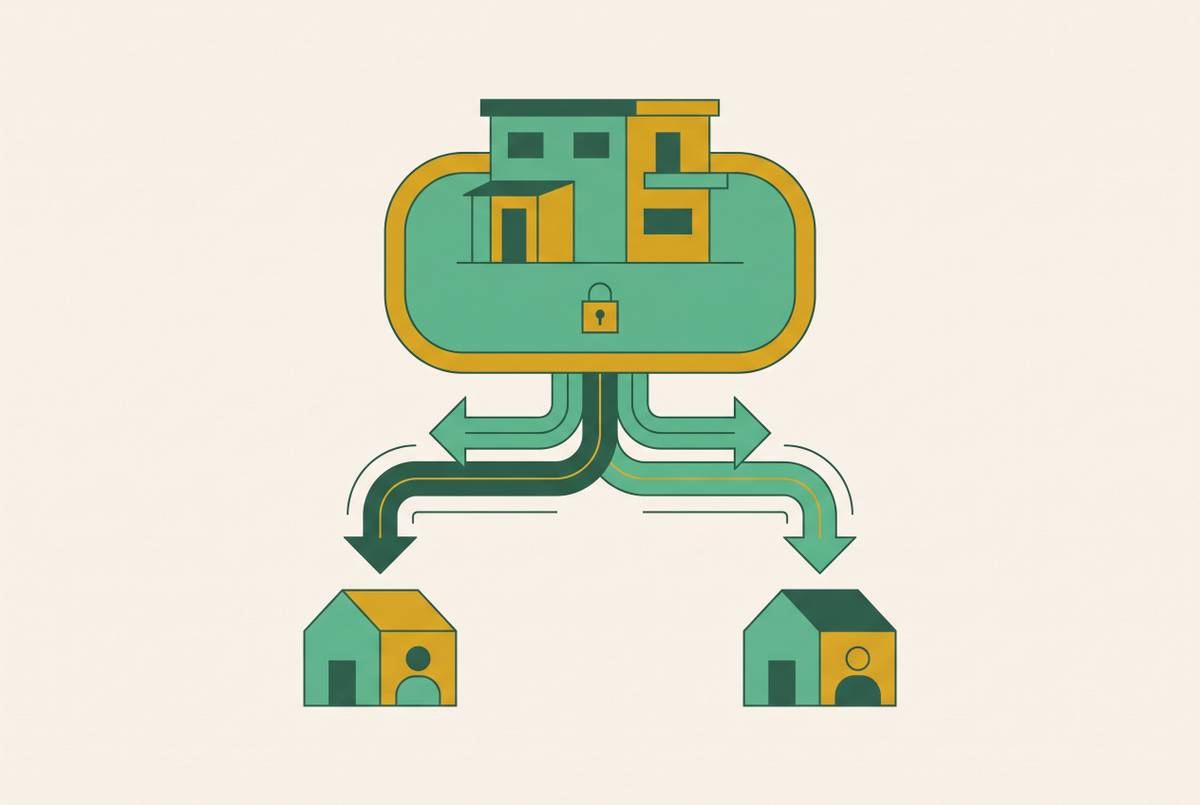
Combining a 1031 exchange with an Opportunity Zone investment requires a taxable handoff. The two tools can work sequentially through a partial exchange, a failed-exchange pivot, or a later sale of replacement property. The governing principle is the same in each case. Recognized gain must go into the Qualified Opportunity Fund within its own investment window, while sheltered exchange proceeds stay in the exchange.
What a 1031 exchange actually defers and why the basis carries forward
A 1031 exchange defers tax. The deferral covers federal capital gains tax, depreciation recapture, the 3.8% net investment income tax, and applicable state capital gains tax. The deferred gain remains embedded in the replacement property's carried-over basis and resurfaces at a future non-exchange sale. Only real property held for investment or business use qualifies, which rules out fix-and-flip inventory, primary residences, and personal property. The One Big Beautiful Bill Act leaves 1031 exchanges intact as of 2026.
That carried-over basis allows the deferral to continue through repeated exchanges across decades. It also explains why a later Opportunity Zone investment must account for accumulated gain, including appreciation since the most recent purchase. For investors who hold until death, heirs may receive a stepped-up basis that erases the accumulated deferred gain. That potential outcome is the benchmark against which the Opportunity Zone's appreciation exclusion should be measured.
The two clocks that govern every exchange and the filing-extension trap
The exchange timetable begins when the relinquished property transfers. The investor has 45 days to identify replacement property and up to 180 days to close, with both clocks running simultaneously. Identification must be written, signed, and unambiguous, using a street address or legal description. It must reach the qualified intermediary or the replacement property's seller before midnight on Day 45. Verbal discussions do not satisfy that requirement.
The identification rules offer different limits. The three-property rule permits up to three properties of any value. The 200% rule permits any number within its combined fair market value ceiling relative to the relinquished property's sale price. The 95% rule permits any number at any value but requires closing on nearly all the identified value, making it a rarely used, high-risk approach.
The closing deadline is the earlier of 180 days or the applicable tax-return due date. A November or December sale can therefore require a filing extension to preserve the full exchange period. Without one, the spring filing deadline can shorten the window and disqualify an otherwise valid transaction.
What Opportunity Zone investments offer and what they require from the investor
An Opportunity Zone investment defers recognized capital gain when the investor puts it into a Qualified Opportunity Fund, or QOF, within the 180-day period that applies. After a 10-year hold, the investor may exclude all appreciation on the QOF investment from tax. The distinction separates the program's initial deferral from its long-term benefit.
For most direct capital gain sales, the investment clock starts on the taxable sale date. Pass-through entity gains and installment sales have different start-date rules, and pass-through investors may elect a date tied to the entity's unextended filing deadline. This clock runs independently of any exchange timetable.
Eligible capital gains can come from real estate, stocks, business sales, and cryptocurrency, among other sources. The program therefore reaches beyond the investment and business real property eligible for a 1031 exchange. Its boundary is instead the taxable event that produces the gain. Proceeds already sheltered in an exchange do not meet that requirement, so the programs connect not directly, but sequentially.
Why 1031 proceeds cannot go directly into a QOF, and what can
Exchange proceeds held by a qualified intermediary are sheltered equity. A QOF investment requires the taxable-gain basis for that separate treatment. Moving sheltered proceeds directly from the intermediary into a QOF does not satisfy the exchange's replacement-property requirement or establish the intended qualifying handoff. The distinction is between two tax treatments, not merely two destinations for cash.
The eligible bridge is gain left outside the exchange. It can arise from cash boot, a mortgage debt shortfall, or a deliberate partial exchange. Because that portion is recognized rather than deferred under 1031, it can become eligible for QOF investment.
Mortgage boot is particularly relevant when the replacement property's lower debt load produces a taxable shortfall. When rates rise, buyers who want lower loan-to-value ratios may run into this issue more often. A QOF can then address the recognized portion rather than forcing the investor to restructure the replacement property's financing. The combined strategy begins by separating sheltered equity from taxable gain.
The split-gain strategy: running a partial 1031 exchange and routing boot into a QOF
Consider an illustrative investor selling a rental property and exchanging into a less expensive replacement. The investor intends to retain direct ownership of real estate while placing the recognized gain associated with the difference into a QOF. This is a hypothetical sequence, not a specific case study. Its practical advantage is that the exchange and fund investment serve separate portions of the same sale.
On Day 0, the relinquished property closes and the qualified intermediary receives the proceeds. In this direct-sale example, the clocks for the exchange deadlines and the Opportunity Zone investment window start together. During Days 1–45, the investor identifies the smaller property to buy as the replacement. After the replacement purchase closes, the intermediary distributes the cash boot portion to the investor.
The investor then places the eligible recognized boot gain into the QOF within 180 days of the original sale. The distribution does not restart the Opportunity Zone clock, so a late replacement closing leaves less time for the fund investment. If taking on less debt creates recognized mortgage boot, the clock for that gain also starts on the original sale date.
The failed-exchange pivot: converting a collapsed 1031 into a QOF investment
A failed exchange creates a different handoff because the investor no longer preserves the 1031 deferral. The sale's gain becomes taxable, and eligible gain may instead enter a QOF. This is a contingency plan for an investor who cannot find suitable replacement property. Its usefulness depends on recognizing the problem while time remains.
An investor abandoning the exchange before Day 45 can notify the qualified intermediary in writing that no suitable replacement has been identified and request the proceeds. The release timetable must be coordinated with the remaining Opportunity Zone window. For a direct sale, that window began on Day 0. Receiving proceeds shortly after the identification period therefore leaves much of the original investment window available.
Waiting beyond Day 45 leaves the QOF deadline unchanged and removes the ability to substitute new properties on the identification list. An intermediary that flags concerns about the replacement property early gives the investor more time to weigh the pivot. The outcome remains a lost exchange, with a separate opportunity for gain deferral and potential exclusion of future QOF appreciation.
The sequential two-step: completing a 1031 exchange now and investing the replacement property's future gain into a QOF later
The longer-horizon approach starts with a completed 1031 exchange and no immediate QOF investment. The investor holds the replacement property and keeps the equity that would otherwise have paid the tax on the deferred gain. At a later taxable sale, the replacement property's gain becomes the potential source for an Opportunity Zone investment. The sequence is linear, with the exchange first and the fund investment after a distinct taxable event.
The carried-over basis determines how much gain emerges at that later sale. It includes the gain deferred through the original exchange, so sizing the QOF investment requires more than measuring the replacement property's recent appreciation. Once eligible gain goes into the fund, growth from that point may qualify for the 10-year appreciation exclusion.
State treatment can interrupt that federal sequence. States with clawback rules, including California, Oregon, Montana, and Massachusetts, may tax deferred exchange gain when the replacement property is sold even if federal gain enters a QOF. The two-step therefore fits a planned later exit, whereas split-gain treatment addresses present boot and the failed-exchange pivot addresses a transaction that cannot close as intended.
Choosing the right layering path based on investor goals and timeline
The choice depends on what the investor wants to own, how much gain is exposed to tax now, and when the investor wants to exit. The size of the gain and which replacement properties are on the market also help guide the choice. A qualified tax advisor and a qualified intermediary should both be involved before the investor commits.
A 1031 exchange alone fits an investor who expects to keep exchanging and rely on a step-up at death. It also fits when no suitable QOF is available or the gain does not justify the fund's administrative complexity. Split-gain treatment fits when the investor plans to buy a replacement with a lower value or less debt and the boot is large enough to make a fund investment worthwhile.
The failed-exchange pivot fits an expiring identification window with no viable replacement and a QOF the investor wants to own. The sequential two-step fits an investor seeking a defined exit from direct real estate over a 10-to-15-year horizon who accepts fund structure and illiquidity.
What to require from a qualified intermediary when a QOF is part of the plan
A layered transaction requires an intermediary that can manage both the exchange and its handoff points. Proactive communication during the 45-day window is essential, as is a clear process for releasing boot or failed-exchange proceeds within the remaining QOF timetable. A delayed response can jeopardize both tax strategies. The intermediary should understand the intended QOF path before the transaction begins.
Independence and custody controls are equally important. IRS rules disqualify parties that have served as the taxpayer's agent, including an attorney, accountant, or real estate broker, within the prior two years. Exchange proceeds should sit in federally insured accounts segregated from operating funds. Two-signature wire authorization involving the intermediary and the investor or counsel provides a structural defense against fraud. For a partial exchange, the intermediary's processes should support permitted partial releases without disrupting the continuing exchange.
Investors should also check how the intermediary is paid because most traditional intermediaries keep the interest earned on the proceeds they hold. Investors should look for interest sharing and rates that are published openly. These criteria must be settled early enough to put the intermediary in place, sign the exchange agreement, and embed assignment language in the sale contract before the relinquished property closes.
The IRS reporting obligations and compliance checkpoints across both programs
A combined strategy requires separate support for the exchange deferral and the QOF election, with documentation connecting each portion of gain to its treatment. The reporting framework is a subject for the investor's accountant and qualified intermediary. Mistakes in the reporting for either program can put the combined tax benefits at risk.
The central checkpoints are the exchange agreement, timely written identification, closing and release dates, and the distinction between carried-over gain and recognized gain. QOF documentation must support the eligible gain and the applicable investment window. For a November or December sale, a return extension may be necessary to preserve the full exchange period. The QOF election must also go with a return filed on time, so both programs depend on meeting the filing deadlines.
State reporting remains a separate question because clawback rules and Opportunity Zone conformity can produce a result different from the federal treatment. Investors should verify that treatment before structuring the transaction. The defensible combined strategy is the one whose documents preserve the same distinction as its design, with sheltered exchange equity staying inside 1031 and eligible recognized gain entering the QOF on time.