Charitable Remainder Trusts Combined With 1031 Exchanges
How real estate investors transition from tax deferral to income and charitable giving.

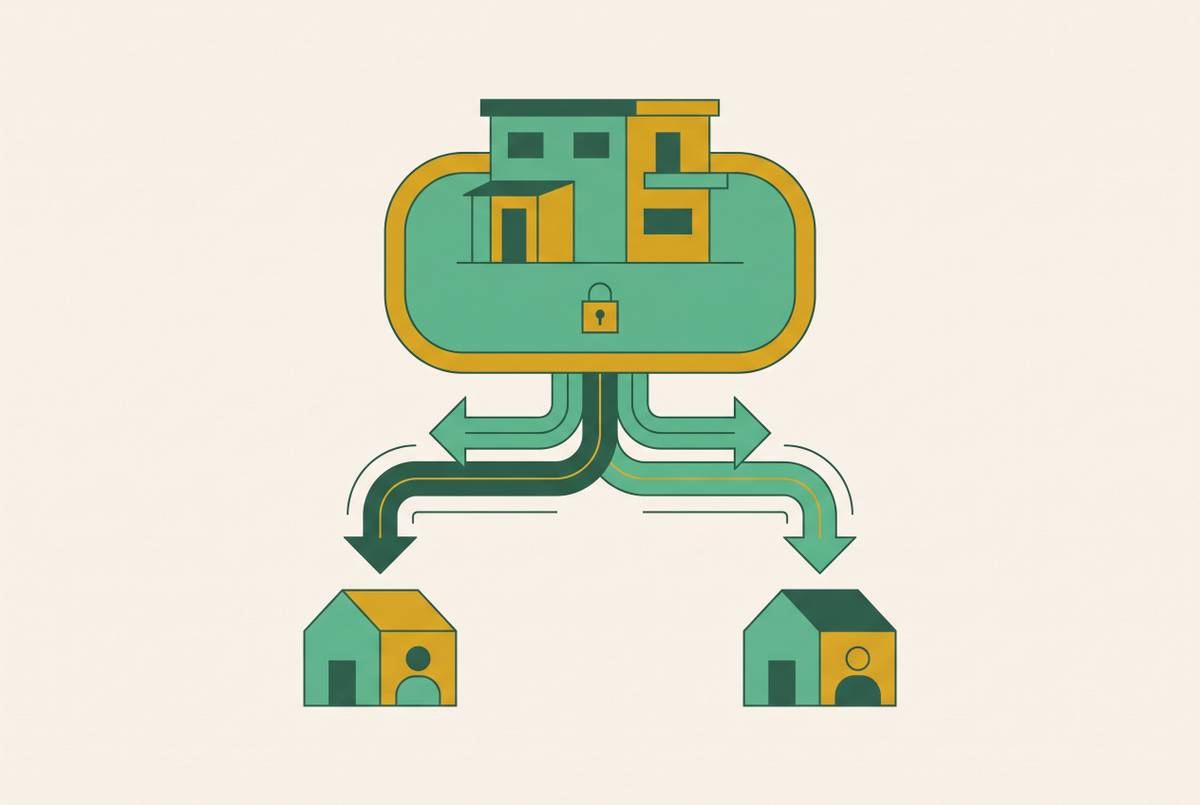
Repeated 1031 exchanges and Charitable Remainder Trusts serve different stages of a real estate investment career. Exchanges preserve capital while an investor builds a portfolio. A CRT can provide a structured exit when income and charitable giving become more important than continued ownership. The two tools work in sequence as separate transactions, and the choice turns on control, heirs, debt, and timing.
Why serial 1031 exchangers eventually face a wall, not just another exchange
An investor approaching retirement may still own valuable property but have little appetite for another round of tenant issues, maintenance, and management decisions. Each exchange moves the original cost basis into the replacement property, concentrating decades of appreciation in an asset with a very low basis. An outright sale then brings the accumulated gain into one taxable event.
The resulting pressure is practical as well as financial. Selling frees the investor from running the property, but the tax bill pushes the investor toward another exchange. That means choosing from the properties available during the identification period, even when the market offers little worth owning. Buying again may keep capital invested while leaving the investor with work they hoped to stop doing. The obstacle is no longer finding another property, but finding an exit that fits the next stage of life.
What a 1031 exchange actually does — and what it cannot do
A 1031 exchange defers capital gains tax by moving sale proceeds into like-kind replacement real estate. Both properties must be held for investment or productive use. Within that requirement, like-kind is broad. A rental single-family property can exchange into vacant land, an apartment building, or commercial property. Full deferral requires attention to replacement purchase price, equity, and debt, because shortfalls can create taxable “boot.”
The investor must identify replacement property in writing within 45 days after selling the relinquished property. The purchase must close within 180 days or by the tax return due date, including extensions, whichever comes first. Both periods run at the same time. A qualified intermediary must hold the proceeds throughout, because actual or constructive receipt by the investor disqualifies the exchange and makes the gain taxable.
The delayed, or forward, exchange is the most common format. Reverse exchanges let an investor buy before selling, while improvement exchanges are another, less common way to structure the exchange. These formats do not change the underlying purpose. The Tax Cuts and Jobs Act narrowed eligibility to real property, removing personal property, and the real-property exchange rules have had no structural changes since.
Separately, through the One Big Beautiful Bill Act, Congress brought back permanent 100% bonus depreciation for qualified property acquired and placed in service after January 19, 2025. Its temporary qualified production property provision applies only to property placed in service before January 1, 2031. Those provisions affect planning while leaving exchange mechanics unchanged. An exchange itself never forgives the deferred gain. Holding until death offers a different result, because heirs inherit with a stepped-up basis that resets the property’s basis to market value and wipes out the deferred gain.
How a Charitable Remainder Trust works as a structured exit
A Charitable Remainder Trust converts appreciated property into an income-producing trust with a required charitable destination. The investor, called the settlor, transfers the property into an irrevocable trust, which then sells it. The transfer cannot be undone once completed. Because the trust is tax-exempt, it pays no capital gains tax on the sale and can reinvest the full proceeds. The gain is permanently avoided at the trust level.
The trust pays income for a specified term or for the life of the settlor, a surviving spouse, or another named beneficiary. When the trust ends, the remaining assets pass to the designated charities. In the funding year, the settlor receives a partial charitable income tax deduction based on the actuarial present value of the projected charitable remainder. That deduction can offset other income, subject to the investor’s circumstances.
The two principal forms produce different income patterns. A Charitable Remainder Annuity Trust pays a fixed dollar amount each year, no matter how well its investments do. A Charitable Remainder Unitrust pays a fixed percentage of annually revalued assets, so payments rise when the portfolio grows. IRS rules constrain the payout rate and require a meaningful projected charitable remainder. With either form, payments to a beneficiary may be taxable even though the trust is tax-exempt.
Recourse debt disqualifies the trust, and paying off the mortgage before transfer is the standard remedy. Some non-recourse debt may qualify for the five-year/five-year exception under § 514(c)(2)(B), but a lawyer must review it. Setup also has a real cost. Legal fees run in the thousands, followed by annual administration and complex tax reporting, which can outweigh the benefit on smaller gains.
How to use 1031 exchanges and a CRT in sequence — and why the order matters
A CRT is not like-kind replacement real property. An investor therefore cannot direct exchange proceeds into a CRT and treat the contribution as the completion of a 1031 exchange. The qualified intermediary must send those proceeds into replacement property. The investor funds a CRT later, with property they already own. Chauvel & Glatt, LLP identifies using exchange property to fund a CRT as a path out of the repeated-exchange cycle.
A simple timeline separates the two phases. During Year 1–20, an investor uses an exchange chain to preserve capital and build equity in real estate. In Year 20+, the investor establishes and funds a CRT with the current property, the trust sells, and income begins. The investor makes the switch when their goals change.
Execution depends on transferring the property before a binding sale obligation attaches. A signed purchase agreement can make the contribution too late, leaving the investor subject to capital gains tax. The prudent sequence is earlier still. Counsel should establish and fund the trust before listing or marketing begins, although listing or marketing alone is not necessarily disqualifying. This distinction separates the legal risk from the recommended safeguard.
The investor can also hold the replacement property until death. Investors who most want to leave real estate to heirs may prefer to pass it on with a stepped-up basis. The CRT solves a different problem. It exchanges continued ownership for income and a charitable legacy, so its suitability depends on whether those outcomes match the investor’s priorities.
Why one investor chose a CRT over a 1031 on a substantial gain
Facing a substantial gain, Fontana considered multifamily prices unworkable. An exchange would have put him on a deadline to buy from the same market he wanted to leave. His decision concerned the quality of the next investment as much as the tax on the last one.
Working with counsel, he established an irrevocable CRT whose remainder would pass to charity after 20 years or at the death of the last beneficiary. He and his partner also formed a 501(c)(3) family foundation and named it as the charitable beneficiary. The foundation was a separate undertaking. They used an online provider at a cost of roughly $2,400–$2,500, applied in November, and received approval by March.
Fontana described new deals running through the structure, with salary payments subject to ordinary income tax on every dollar he took. That account is not a general template for CRT distributions or foundation operations. The trustee was his accountant of 20 years. On a transaction of this size, that established professional relationship was central to execution. The example shows one investor’s counseled decision, whose components require separate legal and tax analysis before replication.
The investors for whom a CRT makes sense — and those for whom it does not
A CRT fits an investor with highly appreciated property, substantial gains, and no intention of leaving that particular real estate to heirs. Retirement can sharpen the appeal when rental operations have become burdensome and income is the priority. Existing charitable intent strengthens the fit. For an investor in a high tax bracket, the funding-year deduction may also offset other current income. The trust can diversify concentrated property equity into stocks, bonds, and alternatives.
The same trust is a poorer fit when the investor still wants to own and control the property. An investor who expects to sell, refinance, exchange again, or use the full principal gives up valuable flexibility by making an irrevocable contribution. Younger investors who are still building wealth face that trade-off directly. For families focused on passing appreciated real estate to children, holding for a stepped-up basis provides a competing path without directing the remainder to charity.
Scale and debt can rule out an otherwise attractive plan. The typical minimum viable contribution is around $100,000, and the economics are more compelling at larger gains. A mortgage also requires resolution before transfer, apart from a narrowly reviewed exception. Finally, an investor who may need the full principal is poorly matched to a vehicle that commits that principal permanently and provides income instead.
The 1031 exchange side of a CRT strategy still requires a qualified intermediary done right
An eventual CRT exit does not reduce the need for a capable qualified intermediary during the exchange years. In each exchange, the intermediary controls the proceeds from the sale. There are no federal regulations governing who can become a QI, so the title alone provides little assurance about fund safety or service quality. When choosing an intermediary, the investor should first check how it protects the funds, then whether it offers steady service and makes its costs clear.
Segregated, per-client accounts at a federally insured bank, with the investor named as beneficial owner, separate one client’s money from another’s. Dual authorization means two people must approve before funds leave. Wire verification adds another independent safeguard. Out-of-band verification should include a call to the investor on a trusted number before a transfer. Technology should enforce segregation of duties and log every transfer, so less work is done by hand and there is less room for errors or misconduct.
A dedicated senior exchange officer provides a consistent point of responsibility for each file. Rates and interest treatment need equal clarity. Across a long accumulation phase, interest retained by the QI can become a substantial cost. A no-fee model that shares interest with the investor deserves consideration for both the interest shared and the absence of an advertised transaction fee.
How to begin — the sequencing of advisors and timing before a CRT can be funded
The first step is to resolve property eligibility and engage the advisors before discussing a listing price or timeline with a broker. The investor should check whether any debt remains and plan to pay it off, unless counsel finds that a permitted exception applies. Estate planning counsel then drafts and establishes the trust. A CPA or CFP with planned-giving expertise models projected income, the charitable deduction, and the tax implications of the selected payout rate. Legal costs should be budgeted in the thousands, with complexity driving variation.
The investor should take as much care in choosing the trustee as in preparing the documents. A corporate trustee or long-standing financial advisor must manage investments and administration on an ongoing basis after funding. If a family foundation will receive the remainder, its formation requires a separate process and a budget for professional fees and the IRS approval timeline. Fontana’s foundation illustrates why that work cannot simply be treated as part of drafting the CRT.
Any remaining exchange belongs with a separately engaged qualified intermediary. The QI handles the acquisition of replacement property during accumulation, while the CRT team handles the later contribution and exit. A binding sale obligation can make a later contribution too late to avoid the investor’s capital gains tax. To protect the sequence, establish and fund the CRT before signing any listing agreement or purchase contract.